


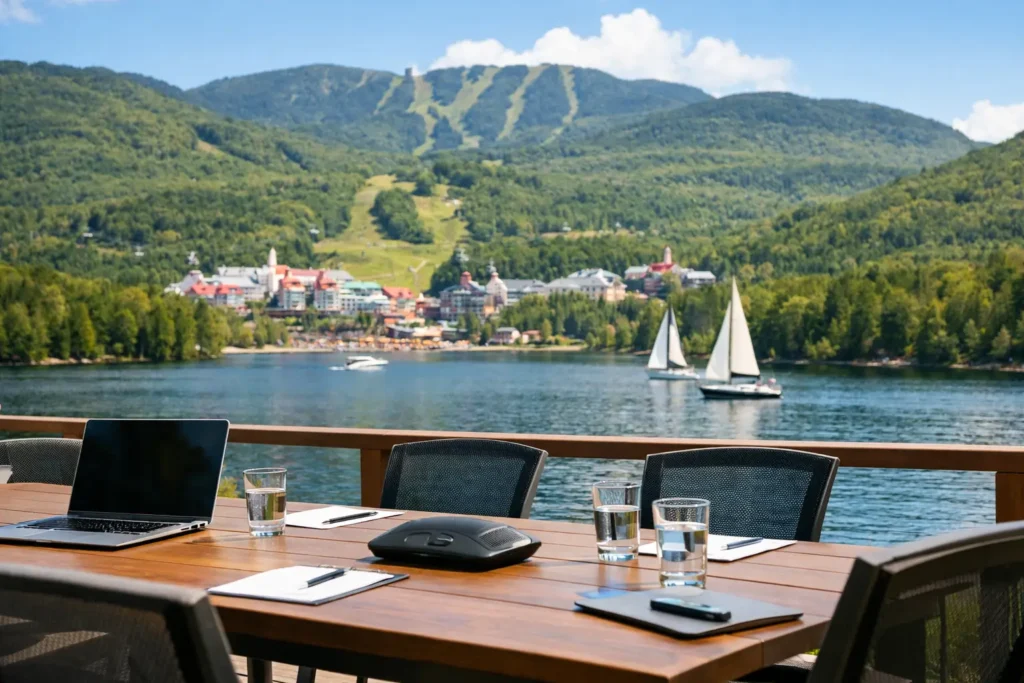
The fastest way to weaken a leadership retreat is to scatter your group across hotel rooms, condo buildings, and off-site meeting spaces. If you are searching for a Mont Tremblant corporate retreat venue, the real question is not just where your team will sleep. It is whether the setting can keep people together long enough for better conversations, sharper thinking, and a stronger sense of momentum.
That is where the venue choice changes everything. A corporate retreat works best when the logistics disappear into the background and the experience feels intentional from the moment your group arrives. In Mont-Tremblant, that usually means choosing between the convenience of a standard hotel setup and the far more cohesive experience of a fully private group property.
What makes a Mont Tremblant corporate retreat venue worth booking
For executive teams, founders, department leaders, and client-facing groups, a retreat venue has to do more than provide enough beds. It needs to support the rhythm of the entire stay. Strategy sessions need a comfortable place to happen. Informal conversations need room to continue after dinner. Team members need privacy when they want it and shared spaces when they do not.
That balance is harder to find than it sounds. Hotels can offer service and predictable infrastructure, but they often divide a team by floor, by building, or by booking category. Separate condos offer more personality, yet they tend to create exactly the kind of fragmentation retreat planners are trying to avoid. People arrive and disperse. Meals happen in pockets. Side conversations get lost.
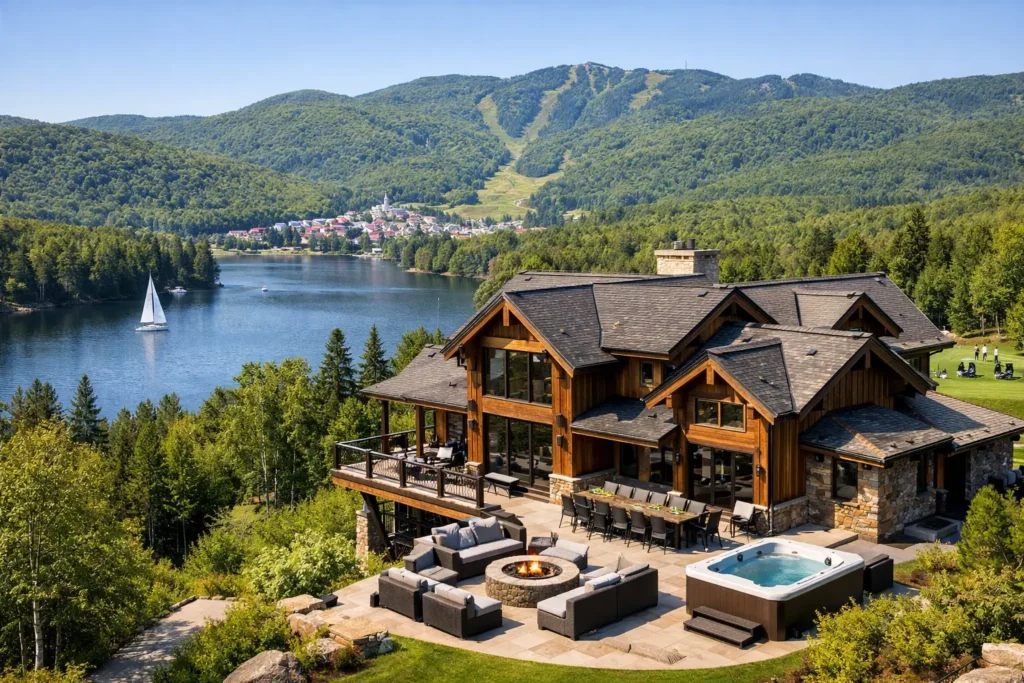
A strong venue keeps the group connected without making the experience feel forced. That usually means one private site, generous common areas, enough separate suites for comfort, and amenities that extend the day naturally. The best retreats are rarely built around a meeting room alone. They happen around the fire pit, in the hot tub after dinner, over coffee on the terrace, and during the unplanned moments between scheduled sessions.
Why private group lodging outperforms hotels for retreats
When companies book a hotel, they often assume the format is easier because it is familiar. For some retreats, that may be true, especially if the group is very large or heavily conference-driven. But for leadership off-sites, team-building stays, client appreciation weekends, and small to mid-sized corporate gatherings, privacy changes the quality of the experience.
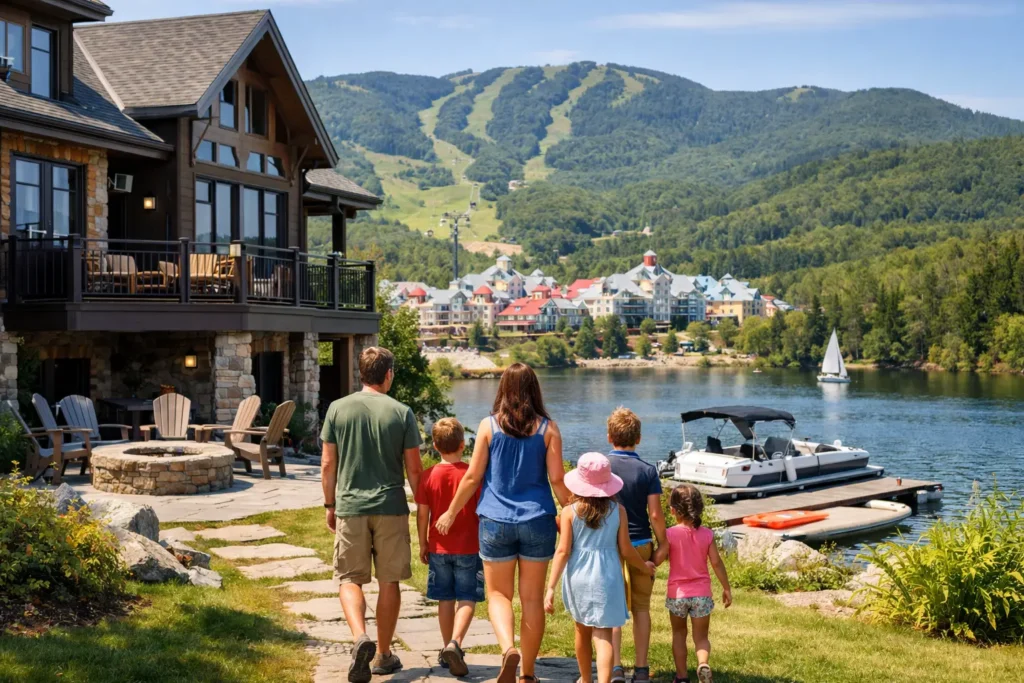
A private alpine property gives your group one address, one atmosphere, and one shared home base. That matters more than most planners expect. It reduces transportation friction, cuts down on coordination headaches, and creates the feeling that the retreat belongs entirely to your team.
It also changes how people show up. In a hotel, attendees often retreat to their rooms between activities and disappear into a public environment that has little connection to the group itself. In a private venue, the setting keeps everyone close without crowding them. That makes collaboration easier and downtime more meaningful.
For companies trying to strengthen culture, celebrate performance, or align around a new direction, that intimacy is not a small detail. It is often the reason the retreat feels memorable instead of merely scheduled.
The difference between enough space and the right space
Plenty of properties in Tremblant can sleep a group. Far fewer are designed to host one well.
That distinction matters because a retreat is not simply an overnight stay. It is a sequence of experiences that should feel coherent from morning to night. Your team may need quiet corners for one-on-one conversations, larger living areas for workshops, outdoor space for fresh air between sessions, and wellness amenities that help everyone unwind after a full day.
The right venue does not feel oversized and empty, nor cramped and overly structured. It offers flow. People can gather easily, step away when needed, and come back together without effort. That is especially valuable for mixed groups that include senior leadership, managers, partners, or clients. Everyone gets a level of comfort that feels elevated, but the group still shares the same environment.
A fully privatized property with multiple suites on one exclusive site often delivers that balance best. It gives the group the closeness of a large chalet without forcing everyone into a single household layout. It also avoids the disconnected feel of booking several unrelated units and hoping the experience comes together on its own.
A better fit for executive retreats and team off-sites
Not every corporate retreat has the same purpose. Some are built around planning and decision-making. Others are reward-driven, designed to recognize high performers or strengthen internal relationships. Some bring together remote teams who rarely spend time in person. Each format asks something different from the venue.
For executive retreats, privacy is usually non-negotiable. Leadership teams need a place where strategic discussions can happen comfortably and confidentially. A private venue supports that without the interruptions and public traffic that come with resort-style common areas.
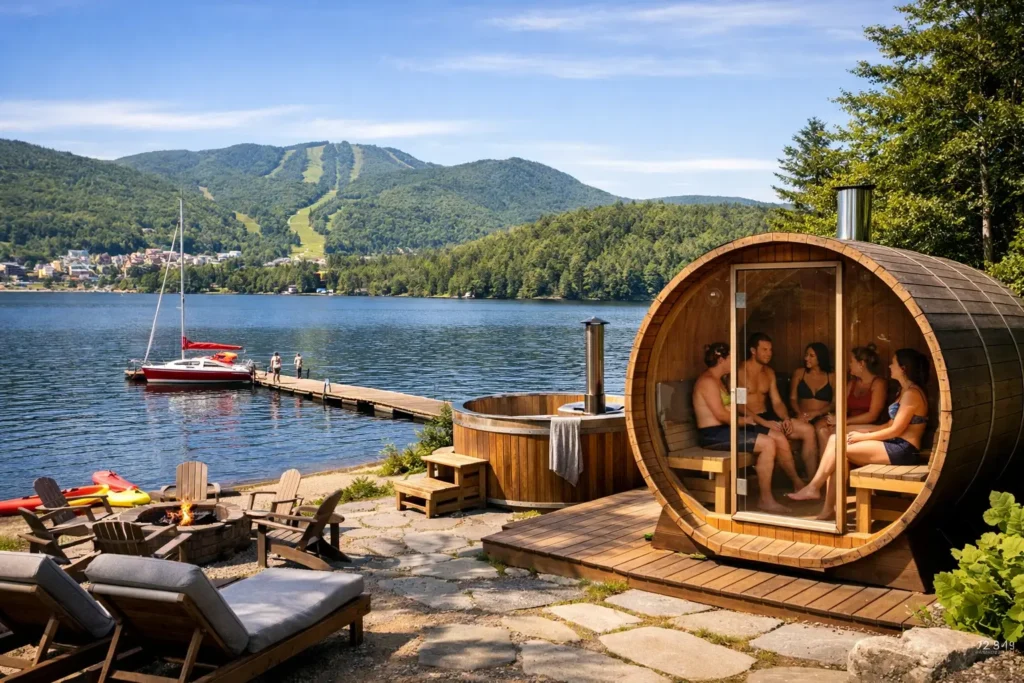
For team-building retreats, atmosphere becomes just as important as layout. The setting should feel special enough to justify stepping away from the office, but relaxed enough that people can connect naturally. Shared terraces, spas, saunas, and outdoor gathering spaces help create those moments without relying on a packed itinerary.
For incentive stays or client hosting, the standard rises again. The venue needs to feel polished, distinctive, and easy to enjoy immediately. Premium accommodations matter, but so does the impression of exclusivity. A property reserved entirely for one group sends a stronger message than a block of rooms in a busy hotel ever can.
Why Mont-Tremblant works in every season
Mont-Tremblant has a clear advantage as a retreat destination because it is not tied to one season or one activity. Winter brings skiing, snow-covered scenery, and a naturally cozy rhythm. Summer offers golf, hiking, lake days, and long evenings outdoors. Spring and fall are ideal for calmer, more focused stays with a premium sense of escape.
That flexibility makes planning easier for companies that want a destination with broad appeal. Not every attendee has the same interests, and not every retreat needs to revolve around adrenaline or formal programming. Tremblant gives organizers room to build the right pace.
Some groups want a schedule packed with outdoor activities. Others want a quieter agenda built around workshops, meals, and restorative downtime. A great venue supports both. It should feel close to the action, yet private enough that returning to the property feels like part of the reward.
What sophisticated planners should look for
When evaluating a Mont Tremblant corporate retreat venue, experienced planners tend to ask better questions than just rate and occupancy. They want to know whether the property simplifies the stay or adds hidden complexity.
Start with how the group will live on site. Can everyone stay together in one private setting? Are there enough distinct suites or sleeping areas to preserve comfort? Do the common spaces actually accommodate a professional group, or do they only photograph well?
Then consider the emotional side of the experience. Will the property feel memorable the moment guests arrive? Does it create a sense of exclusivity that matches the purpose of the retreat? Are the amenities there to support genuine connection, not just fill a brochure?
Finally, think about logistics. The best venues reduce decision fatigue. Parking, arrivals, shared meals, downtime, and movement through the property should all feel straightforward. If the setup requires your team to constantly coordinate between units, buildings, or public resort spaces, the venue may be working against the retreat.
This is exactly why a private alpine estate model stands out. Le Champery offers a distinctive alternative for companies that want the intimacy of a private chalet, the capacity of multi-unit accommodations, and the elevated comfort of a premium resort stay, all reserved for one group on a single site.
The real value of exclusivity
Exclusivity is often treated like a luxury extra. For corporate retreats, it is much more practical than that.
When a venue is privatized, your team can settle in quickly and use the property in a way that feels natural. Breakfast can run long because the conversation is productive. A leadership discussion can continue by the fire without competing with other guests. The evening can shift from structured dinner to relaxed networking without anyone needing to relocate.
That freedom improves the quality of time spent together. It also gives the retreat a stronger sense of identity. People remember places where the entire environment supported the purpose of the gathering.
There is, of course, a trade-off. A fully private venue is not the lowest-cost option, and it is not meant to be. But for groups that value cohesion, comfort, and a polished experience, the return is easy to feel. Better flow, stronger engagement, and less friction usually lead to a retreat that actually does what it was meant to do.
The best corporate retreats are not built around excess. They are built around the rare luxury of having the right people in the right place, with enough privacy and comfort to make the time count. In Mont-Tremblant, that starts with choosing a venue that brings everyone together and lets the experience do the rest.